


RAPAKUNTO
Se kehonpainoharjoittelu-blogi

How I Lowered My LDL Cholesterol by 25%
A Blood Test That Opened My Eyes
I’ve made it a habit to get blood tests once a year. It’s my way of making sure that, at least on the surface, everything under the hood is still working as it should. Last August, my annual “service check” revealed something I wasn’t particularly happy about: my cholesterol levels. They had been elevated for quite some time, but now my LDL — the so-called “bad” cholesterol — had climbed uncomfortably high.
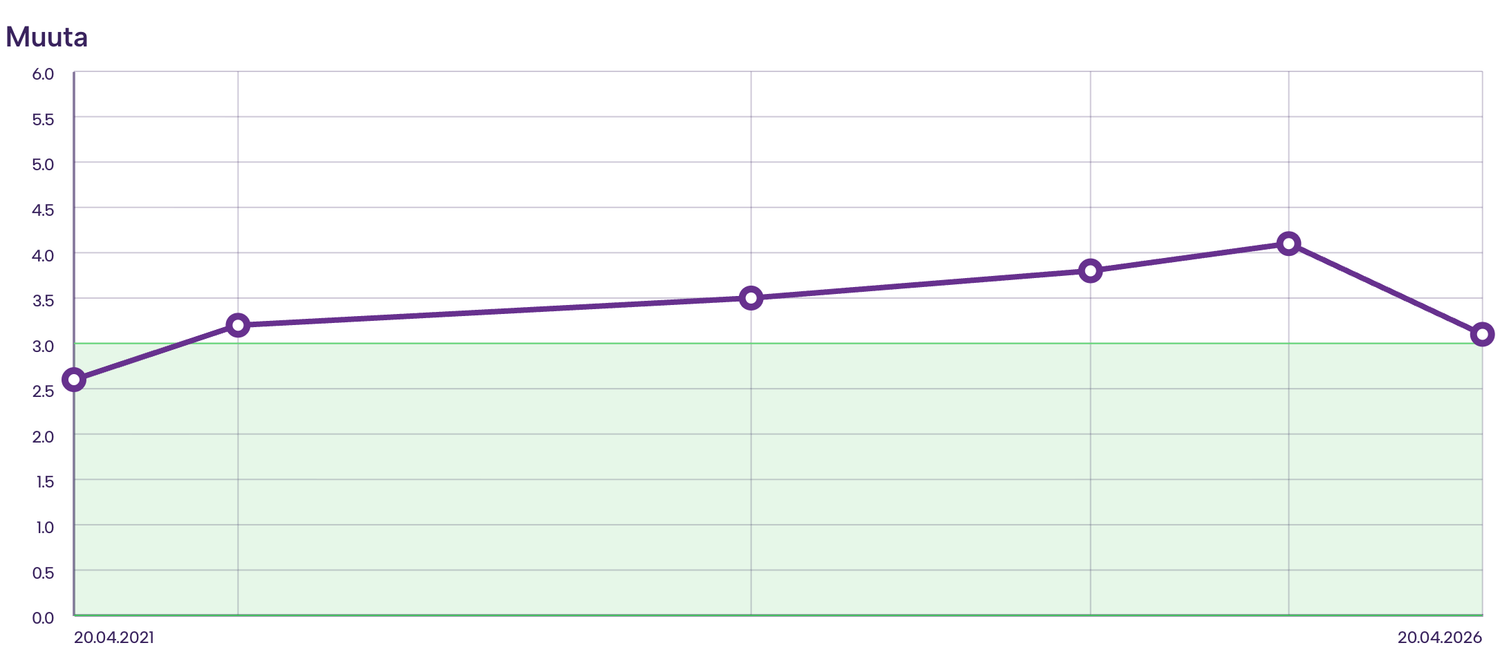
When I took a closer look at my previous results, I realized that the trend had actually been remarkably consistent. Ever since my first measurement in 2021, my LDL had been steadily creeping upward.
I also have a fairly strong family history of cardiovascular disease. The men in my family, particularly on my father’s side, haven’t exactly been known for their longevity. Many of them died from cardiovascular disease at around the age of sixty.
With that in mind, being 42 years old myself, I had a pretty good reason to take this seriously.
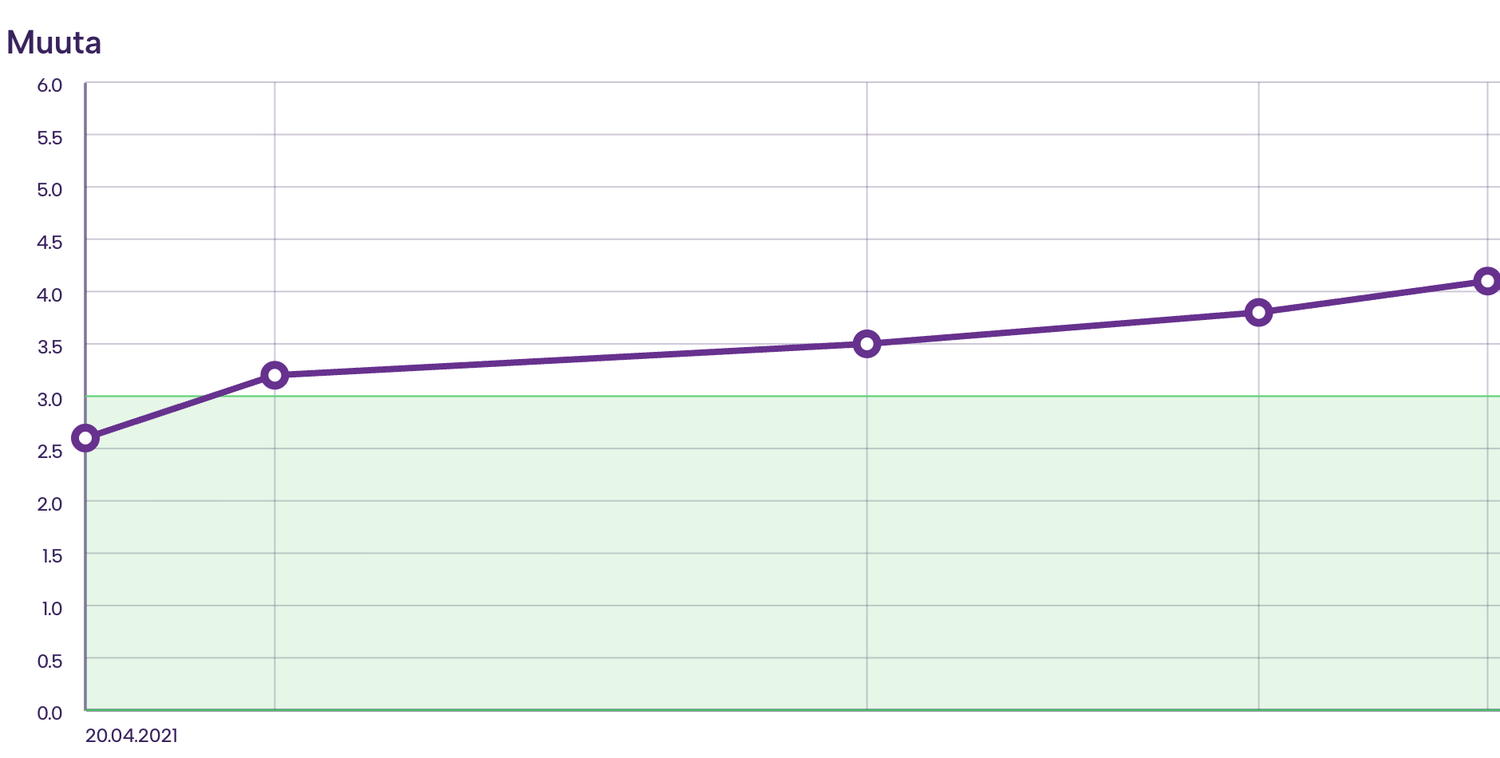
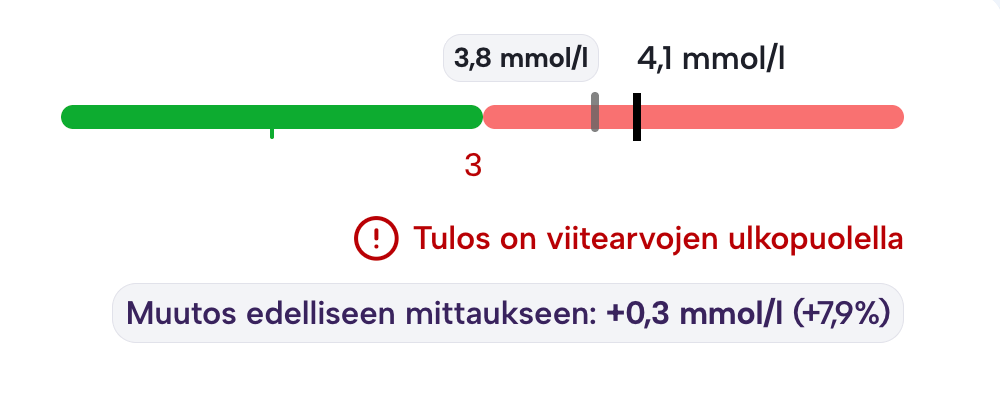
Back in April 2021, my LDL cholesterol was 2.6 mmol/L, which was 0.4 below the upper reference value. From there, it increased steadily year after year, reaching 4.1 mmol/L in August 2025 — 1.1 above the reference value.
According to my doctor, medication would be the sensible option and essentially the only way to bring my cholesterol down enough. Dietary changes alone, I was told, probably wouldn’t do the job.
Was Cholesterol Medication Really My Only Option?
I wasn’t quite ready to accept that without putting it to the test. I’m certainly not saying that my doctor was wrong. Looking at the evidence, high LDL cholesterol significantly increases the risk of cardiovascular disease, and statins have been shown to reduce that risk in many groups of people. A doctor’s job is to make recommendations based on the best available evidence.
So, in the big picture, statins are a very good thing.
I’m not an LDL denier either. I understand that in some cases lifestyle changes simply aren’t enough to reverse the trend, especially when genetics are working against you.
Still, I wasn’t going to start taking cholesterol medication without conducting a little human experiment first — on myself.
Statins are extremely well studied and generally well tolerated, but they can also cause side effects. For that reason, I’d rather not take them unless I actually need to.
I probably wasn’t going to die of a heart attack within the next year because of this, so I decided to see how far I could get through dietary changes alone.
If my doctor was right, I’d be picking up a prescription within a year and admitting defeat. And if that happened, I could at least start taking the medication knowing that I had first done what I reasonably could myself.
What Did I Change in My Diet?
Naturally, I dug through as much research on the subject as I could and put together a list of things worth adding to my diet, as well as things I should reduce or perhaps eliminate altogether.
I wasn’t trying to make everything perfect or optimize every bite of food I ate. Instead, I focused mainly on the changes backed by the strongest evidence: reducing saturated fat and increasing soluble fiber.
I wanted to keep things practical.
I wasn’t interested in designing the perfect diet on paper. I wanted changes that I could actually stick to in everyday life. After all, even the healthiest diet in the world isn’t much use if you can only tolerate it for two weeks.
Reducing saturated fat mostly meant paying more attention to foods like cheese, butter, cream and similar products.
I’ve always been pretty enthusiastic about full-fat cream cheese, so it was time to replace it with a rather uninspiring 5% fat Polar cheese. The initial shock was considerable. I also tried to minimize the use of cooking cream and replaced it with oat-based alternatives whenever possible. My usual spread was replaced with one containing plant sterols. That didn’t exactly delight my taste buds either, but by now I’ve gotten used to it.
Increasing soluble fiber was perhaps an even bigger change. I started eating considerably more oats and also began taking Vi-Siblin, a psyllium fiber supplement, every day together with my protein supplement. There is surprisingly strong research evidence behind both oats and psyllium when it comes to cholesterol, so they were fairly easy choices to make.
The most important thing for me, however, was keeping the whole project simple.
I didn’t rebuild my entire life around a new diet. The idea was to find out whether a handful of relatively straightforward changes could actually make a meaningful difference.
Six months later, it was time to find out.
The Follow-Up Test
About six months later, I had my cholesterol levels measured again.
I was very happy with the results.
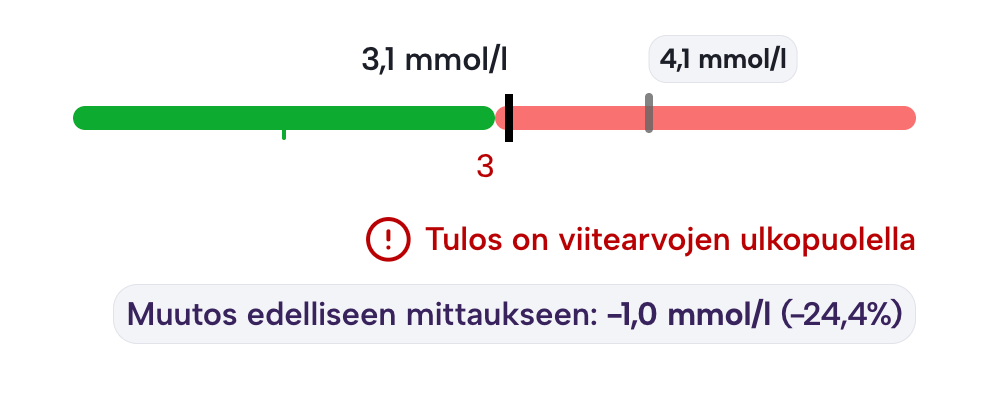
My LDL cholesterol had dropped from 4.1 mmol/L to 3.1 mmol/L — a reduction of almost 25%.
At this point, I’m extremely pleased with that result.
What makes me particularly happy is that this didn't require any radical lifestyle overhaul or strict dieting. I didn't spend six months living on oatmeal, nor did I give up all my favorite treats or stop eating at restaurants. I simply made a few relatively straightforward changes that I can easily stick to in the future.
An LDL level of 3.1 mmol/L is by no means a perfect result, and it's entirely possible that I can bring it down further. On the other hand, I may have already picked the low-hanging fruit, and getting it significantly lower from here could prove much more difficult. Considering my overall cardiovascular risk, I'm still not quite where I'd ideally like to be. I also understand that there's no single LDL cholesterol target that works for everyone. The appropriate level depends on a person's overall risk profile.
In any case, the results strongly suggest that dietary changes had a much greater impact in my case than I had anticipated.
Perhaps the most interesting part will be seeing what my next blood test shows. Was this just the first step in the right direction, or am I already getting close to what I can realistically achieve through sensible dietary changes alone?
For reference, my other values were:
Total cholesterol: 5.1 mmol/L
HDL cholesterol: 1.52 mmol/L
Triglycerides: 0.98 mmol/L
There wasn’t much change in those values.
Summa Summarum
If the goal of this experiment was to find out whether I could influence my cholesterol levels through diet, then at this point the answer appears to be yes. At the same time, it’s important to be clear about what we can — and cannot — conclude from an experiment like this.
First, I can’t say for certain which individual change had the biggest effect. I reduced saturated fat, increased soluble fiber, started using a product containing plant sterols and generally paid more attention to my diet. Because I changed several things at the same time, there’s no way to isolate the effect of any one of them.
Second, I have no way of knowing whether the same approach would produce similar results for someone else.
Everyone’s genetics, starting point and lifestyle are different. Some people might see an even greater response to dietary changes, while others may see a much smaller effect.
But there is one thing I can say with reasonable confidence: the idea that dietary changes couldn’t make a meaningful difference certainly didn’t hold true in my case.
If LDL drops by almost 25% in six months without medication, then diet has clearly played a significant role — even if I can’t pinpoint exactly how much each individual change contributed. I’m glad I decided to find out how much I could influence my numbers myself, through relatively small changes, before starting medication.
In my case, the answer was: more than I expected.
At least for now, I didn’t have to walk sheepishly back to the clinic to pick up that statin prescription.
That doesn’t mean the day won’t eventually come.
Have you ever tried — or managed — to lower your cholesterol through dietary changes?

© 2026 All rights reserved