


RAPAKUNTO
Se kehonpainoharjoittelu-blogi

Zinzino BalanceOil: Is It Worth the Hype or Just Marketing?
Note! This post is NOT a commercial collaboration, and no company has influenced the content or conclusions.
Do You Have a Moment to Talk About Fatty Acids?
I received an interesting direct message on Instagram. The sender was a Finnish mobility/strength coach I respect. He asked if I would be interested in hearing nutritional info related to athletes’ fatty acid balance and how it affects quality of life and training. That sounded intriguing, so I said absolutely. I admit I didn’t fully understand what I had signed up for at that point. I thought I was joining a lecture for a bigger group, but instead I found myself on Zoom with a camera talking to a Zinzino network marketer about how excellent their Omega-3 product is. There was no aggressive sales pitch at all. The salesperson was very courteous, the topic was interesting — and for that reason I listened to the information until the end with pleasure.
Zinzino markets its BalanceOil as a “unique complete solution” that, according to them, does what ordinary fish oils cannot. The product is claimed to correct the body’s omega-6 to omega-3 ratio to a healthy level (below 3:1) within 120 days. The result is confirmed with their fatty acid test, which gives the user a concrete number showing the situation before and after use.
The product is also justified by the fact that the oil combines fish oil, olive oil, and vitamin D3 — and they especially claim that the olive oil’s polyphenols protect the fish oil from oxidation and improve its usability. According to Zinzino, this is not just fish oil, but a carefully considered blend that offers superior results.
I’m personally interested in the topic because there is a lot of evidence that omega-3 fatty acids matter for health, and at the same time the market has a huge variety of products — from cheap supermarket capsules to expensive premium oils. Can this product really be significantly better than a cheaper supermarket version? Or could you get the same effect much more affordably, as long as the dosage is correct? My interest was further fueled by the fact that I eat fish very infrequently, and my omega-3 supplement use has been only sporadic.
This starting point was simply too juicy to leave unused. An obsession with the topic began to quietly develop in my head.
The text is relatively long because I wanted to cover the topic thoroughly. However, if you’re an impatient modern reader, you can jump straight to the results here. Ideally, of course, you would read the entire article. So! What follows are my experiences in the world of fish oils.
Fatty Acid Testing from Blood
I politely said “no thank you” to the oil itself at this stage, but admitted that the test was interesting. Naturally my suspicion was raised when it came to the Zinzino-offered test, so I started to wonder whether the test can be considered reliable when it comes from the same company that also sells the product.
There is a clear conflict of interest here. The company’s advantage is to present test results in such a light that the customer continues using the product. When the report is built within Zinzino’s own system, it can emphasize things that support their narrative. Graphs and colorful meters are easy to design to look convincing and guide the customer toward their oil.
In addition, the question arises about what the report leaves unspoken. Has the result been presented in a way that makes it appear more dramatic than reality? Are there metrics included that are not widely recognized in medicine, but that appear credible to an ordinary person?
The fact remains that the samples are analyzed at Vitas Laboratory in Norway, which is an independent and internationally respected organization. So the test itself is very likely reliable as a measurement. The critical question is less about how the blood is analyzed, and more about how the results are presented and interpreted. That part is strongly in Zinzino’s hands — and that is exactly why it should be approached with healthy skepticism.
I bought two tests and took the first one immediately. As you might guess, my results were not very good for the reasons I mentioned earlier. Below is the report in images:
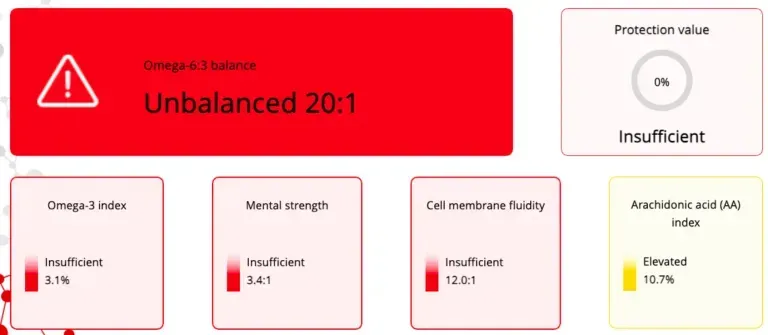
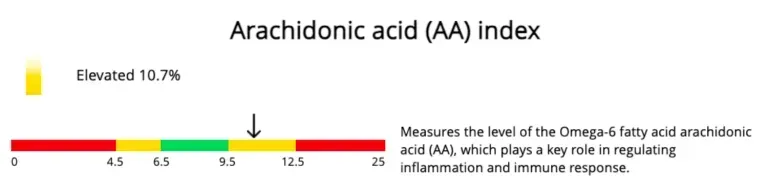
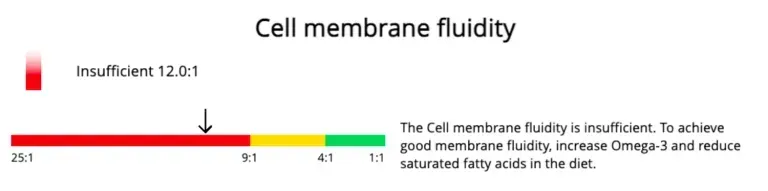
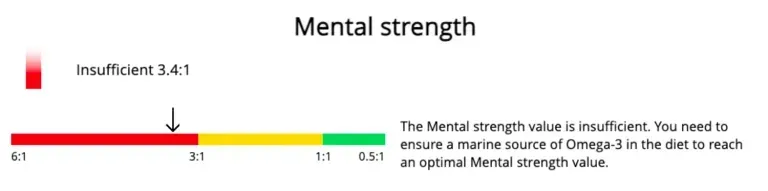
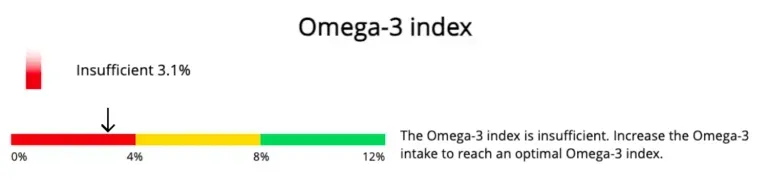
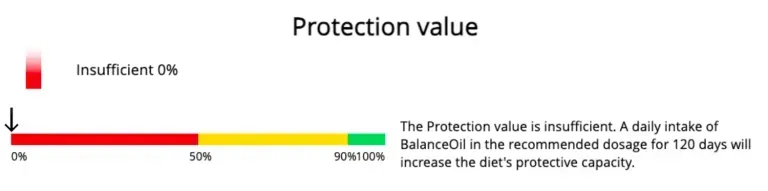
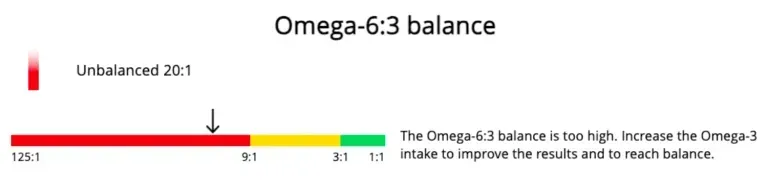
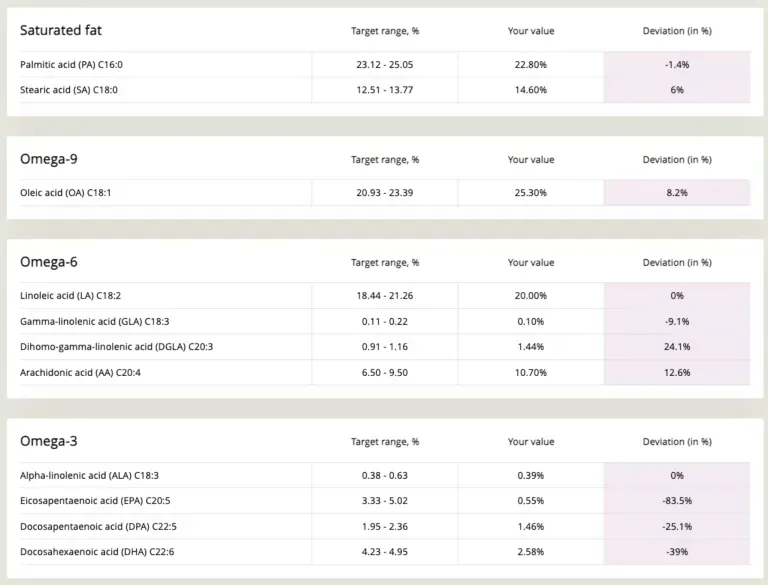
When you open the Zinzino fatty acid test report, the first surprise is how many different numbers and metrics are displayed. Behind it, there is nothing mystical: the test measures a total of 11 different fatty acids from a dry blood sample taken from a fingertip. These include the most important omega-3 fatty acids EPA and DHA, the precursor of inflammatory mediators AA (arachidonic acid), as well as a number of other fatty acid types, such as omega-6 and omega-9 fatty acids and saturated fats.
What surprised me a bit was that of these 11 fatty acids, direct concentrations in the blood are not reported, but their relative percentages. In other words, the test tells how large a part of the total measured fatty acid pool is a specific fatty acid — not how much of that fatty acid actually circulates in your blood. From this, various ratios are then calculated, such as: , , AA:EPA ratio, and
omega-6:3 ratio
omega-3 level (EPA + DHA %)
AA:EPA -ratio
Zinzino’s own indexes such as “cell membrane fluidity”
These numbers can indicate the body’s fatty acid balance, but it’s important to understand that these are relative measurements, not absolute quantities. This means a ratio can look good even if the actual omega-3 levels are low, or vice versa.
Let’s imagine two individuals, for example:
Person A: omega-6 = 2, omega-3 = 1 → ratio 2:1
Person B: omega-6 = 20, omega-3 = 10 → ratio also 2:1
The ratio is identical for both, yet their actual fatty acid levels are completely different. This is why ratios always contain a small built-in bias: they describe balance, but not whether fatty acids are sufficient in the first place. In the case of the Zinzino test, this is especially pronounced, because the report itself is built almost entirely around ratios. The test itself is a reliable laboratory analysis, but its interpretation should be approached with an understanding of what it actually measures — and what it does not. We’ll return to this point shortly.
Zinzino BalanceOil+ Marketing Claims
Zinzino promotes some fairly strong marketing claims: an “optimal” omega-6:3 ratio, polyphenol protection, and various “health indices”. Let’s go through some of these and see what they actually mean.
Optimal Omega-6:3 Ratio
One of the most visible claims is that the body’s omega-6 and omega-3 fatty acids should be below a 3:1 ratio, and that this value is some sort of “scientifically optimal” target. They justify the use of BalanceOil by saying it corrects the ratio to this ideal number in 120 days.
At this point it’s important to consider what science actually says versus what the marketing materials suggest.
Although omega-6:3 ratios are discussed a lot, no official health authority gives a numeric recommendation, let alone bases general guidance on a specific ratio. The idea of an “ideal 1–3:1 ratio” apparently comes mostly from older evolutionary theories and some individual researchers’ (like Artemis Simopoulos) views, rather than established guidelines. You can correct me if I’m wrong.
Even if we assume that the ratio itself is relevant, I see one major problem here: as mentioned earlier, the test does not measure absolute fatty acid concentrations in the blood, but relative proportions. This is an important distinction, because a ratio can appear low even when total levels are low for both fatty acids. Conversely, the ratio can also appear high even if the omega-3 level itself is actually quite good. A ratio alone therefore does not tell us whether the body is “deficient” in something or whether something is present in abundance. It simply describes the balance between two numbers. Thus, if both omega-6 and omega-3 levels are low, the ratio can still be below 3:1 — even though the absolute omega-3 level may not be sufficient from a health perspective..
My personal opinion, then, is that on a practical level this is pure marketing talk, and those ratios don’t really tell us anything. Much more interesting and important information would be the absolute EPA and DHA levels. In many studies and laboratory methods, the EPA + DHA content of red blood cells is considered optimal when it is around 8% or higher (the official Omega-3 Index). This is based on observations where higher values are associated with better cardiovascular health. It is still worth remembering that this is not a strict official recommendation for everyone, but rather a guideline-level target. (1)(2)
This ratio can also easily give the impression that omega-6 is somehow a negative thing and that its intake should be reduced, which is not true at all. What matters is the overall context — and the sources from which those omegas are obtained. (3)
Olive Oil Polyphenol Protection
Another marketing claim concerns the polyphenol protection of BalanceOil, which is derived from high-quality olive oil.
According to Zinzino, what makes BalanceOil superior is specifically its polyphenol content. These antioxidant compounds are said to “protect” the fish oil from oxidation and create a “synergy” that ordinary omega-3 products supposedly lack. This helps, to quote Zinzino, to “keep essential omega-3 fatty acids fresh and effective and help them be fully absorbed by your body.”
It is true that olive oil contains polyphenols, which are antioxidant compounds. EFSA (the European Food Safety Authority) has even approved a health claim stating that olive oil polyphenols help protect lipids from oxidative stress. Screenshot from EFSA’s website:
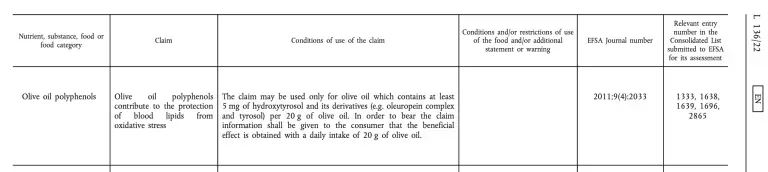
However, when you examine more closely the document (2011;9(4):2033) in which this claim is explained, it becomes clear that it refers specifically and exclusively to the oxidation of LDL particles. It does not mention any other lipids. In fact, the claim is quite precise: polyphenols reduce the oxidation of the lipid components of LDL and inhibit the formation of oxidized LDL (ox-LDL).
Based on this, my conclusion is that:
EFSA does not claim that polyphenols protect EPA or DHA
nor does it claim that polyphenols protect fish oil inside a supplement bottle
nor that polyphenols reduce the oxidation of omega-3 fatty acids inside the body
In summary, I see this approved health claim as relating solely to the protection of LDL cholesterol, not to the protection, absorption, or improvement of omega-3 fatty acids or fatty acid profiles.
Polyphenols are healthy and antioxidant compounds, but the claim of a “polyphenol synergy” with omega-3 fatty acids is marketing, not something strongly supported by research. The actual oxidative protection of BalanceOil comes from tocopherol extract, that is, vitamin E — not from olive oil polyphenols.
I highly support the use of olive oil, and it is indeed an excellent addition to the product. However, when looking at the amount of polyphenols present in BalanceOil (3.5 mg per 12 ml), it can be noted that this same amount of polyphenols can easily be obtained simply by using high-quality olive oil daily as part of normal cooking.
Fatty Acids and Health Indices
When I first received my test results for review, I was surprised by how many different fatty acids were measured. I looked into the topic quite thoroughly and studied what all of these fatty acids actually do in the body. I came to the conclusion that neither my own understanding nor my interest really extends far enough for a truly deep, detailed analysis of all of them. My view, however, is that not all of the measured fatty acids are particularly meaningful from a health perspective. The ones that truly matter are EPA, DHA, and AA.
These three fatty acids are consistently the focus of research, and they are where virtually all observed health effects seem to originate.
Something similar applies to the various indices created by Zinzino, such as “cell membrane fluidity” or my personal favorite, “mental strength.” These are, for the most part, almost entirely Zinzino’s own marketing constructs and can easily lead the consumer to think that something needs to be fixed when the values are shown in red. I won’t go into a detailed breakdown of these indices here, but I will say this: they do not appear to have anything to do with real science. I am, of course, open to changing my view if presented with solid evidence.
120-Day Human Experiment
Immediately after completing the first Balance test, I began the project. The goal was to see what could be achieved over four months using a fish oil purchased from a regular grocery store. At the end of the project, I took a second Balance test to see what kind of changes occurred during that time. I want to emphasize here that I purchased the tests with my own money and that I am not affiliated with Zinzino in any way.
First, it was of course necessary to find out what BalanceOil+ actually contains. This information was available directly on Zinzino’s website:
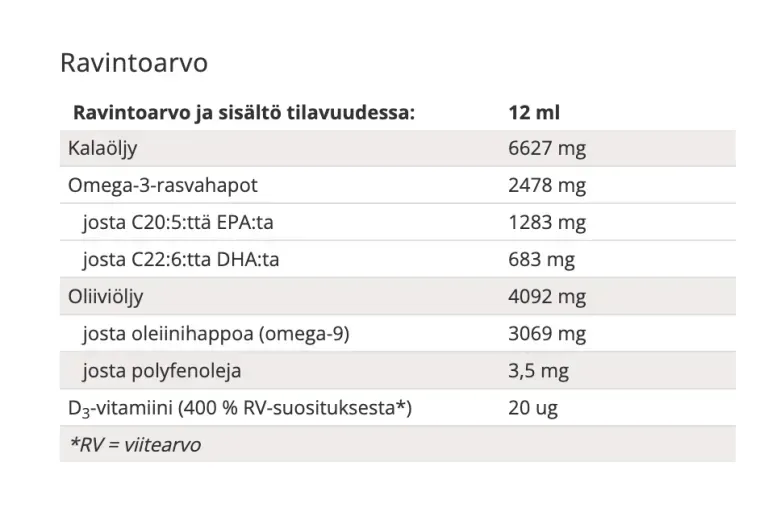
BalanceOil+ nutritional values. Sorry for the Finnish
From this nutritional information, I was practically interested in only two things: EPA and DHA. A quick calculation shows that 1 ml of BalanceOil contains 107 mg of EPA and 57 mg of DHA. This suggests that it is likely a high-quality and potent fish oil product, especially given the high proportion of EPA. According to Zinzino, the 12 ml serving listed in the nutrition table is the recommended daily dose for an 80 kg person, so I kept that in mind when evaluating alternatives. It’s worth mentioning that although I personally weigh about 74 kg, I decided to run the test using the dose intended for someone 6 kg heavier.
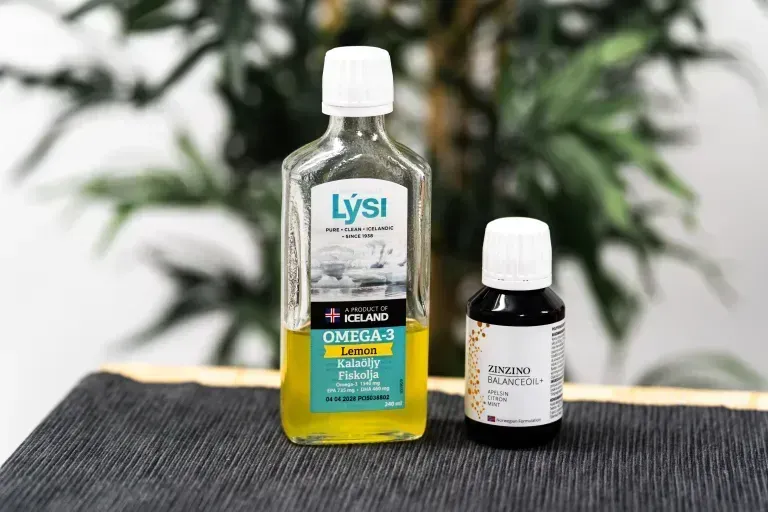
From Zinzino’s website, it also became clear that the fish oil they use comes from Lysi’s factory, so it was natural to turn my attention in that direction. It’s hard to believe that Lysi would supply Zinzino with some dramatically superior raw material compared to what they sell themselves in stores. I found ”Lysi Omega-3 LEMON” fish oil at my local grocery store for €15.79 (a 240 ml bottle). Its nutritional values per milliliter were: EPA 147 mg and DHA 97 mg. Lysi’s product therefore has a more balanced EPA-to-DHA ratio, whereas BalanceOil contains nearly twice as much EPA as DHA.
The Lysi product seemed very solid, and I calculated a dosage for it that would match BalanceOil as closely as possible — more specifically, a dose that would contain at least as much EPA and DHA as BalanceOil. After extensive calculations and careful consideration, the formula was ready and the result was clear: 9 ml.

Because I consider olive oil to be a good thing and an excellent addition, I also wanted to include it in my daily routine and added 6 ml of high-quality olive oil to the equation. My morning fat shot therefore consisted of 9 ml of Lysi and 6 ml of olive oil. This made the mixture even more similar to BalanceOil, although I am one hundred percent certain that it did not affect the actual test results in any meaningful way (except perhaps for the omega-9 value). The taste of Lysi’s oil is also pleasant and not “fishy” at all.
With these specifications, the monthly cost came to €17.40 for the Lysi fish oil, and when the extra virgin olive oil (Borges from the local store) was included, the total monthly cost was very close to €20. I want to emphasize again that I do not believe the olive oil had any impact on the test results.
I think I carried out the project quite successfully. The total duration was 119 days, during which there were only four days when I was unable to take my morning fat cocktail. It’s worth mentioning that this project slightly challenged my deep love affair with intermittent fasting, as I reintroduced breakfast into my life after several years. I’ve tried to compensate by fasting more at the other end of the day. I took the omega oils and olive oil with breakfast, along with my daily dose of vitamin D (50 µg).
During the first week and a half, I had been reading the measurement markings on my measuring cup incorrectly, so I initially took a slightly smaller dose of the Lysi oil (the first bottle lasted 38 days, or about 6.5 ml per day). I corrected this as soon as I noticed the mistake. Otherwise, there were no notable mishaps during the project.ä.
Final Testing
After 119 days of daily fat sipping, I pricked my finger once again and spilled some blood in the name of science. About ten days later, the results arrived. Below are images from the new test report:
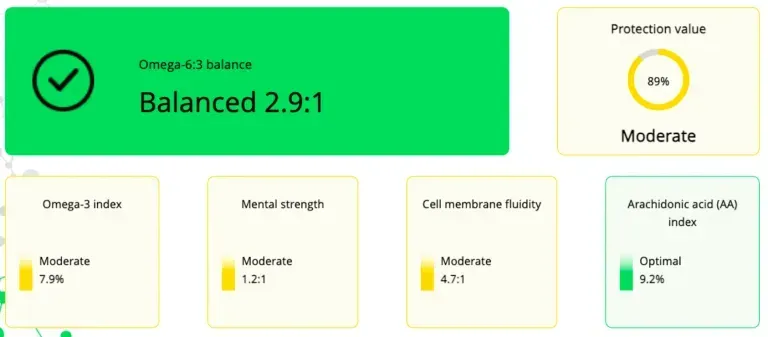
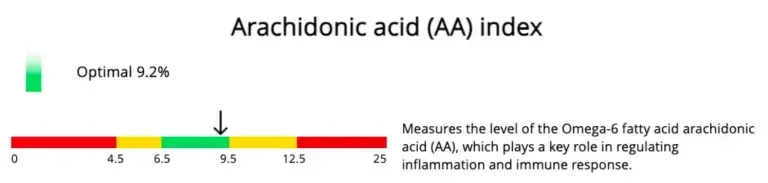
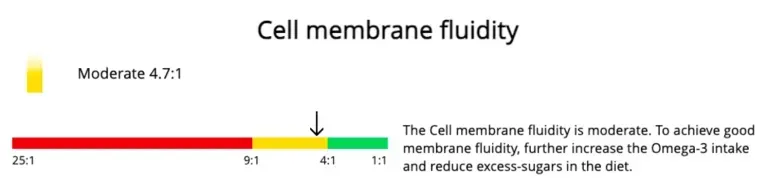
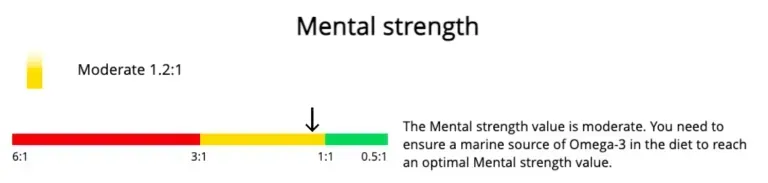
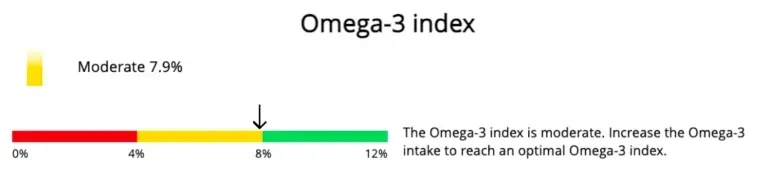
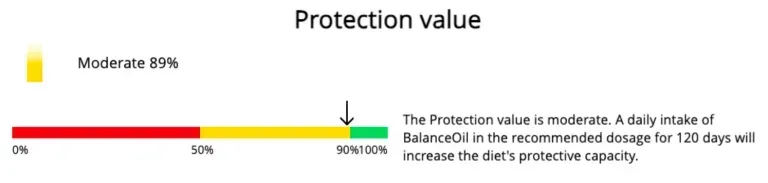
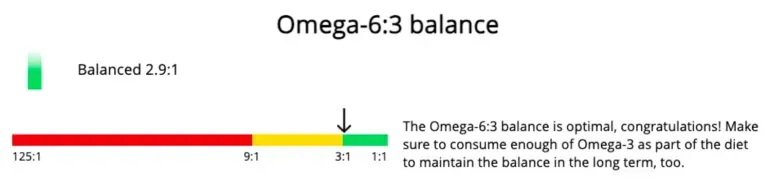
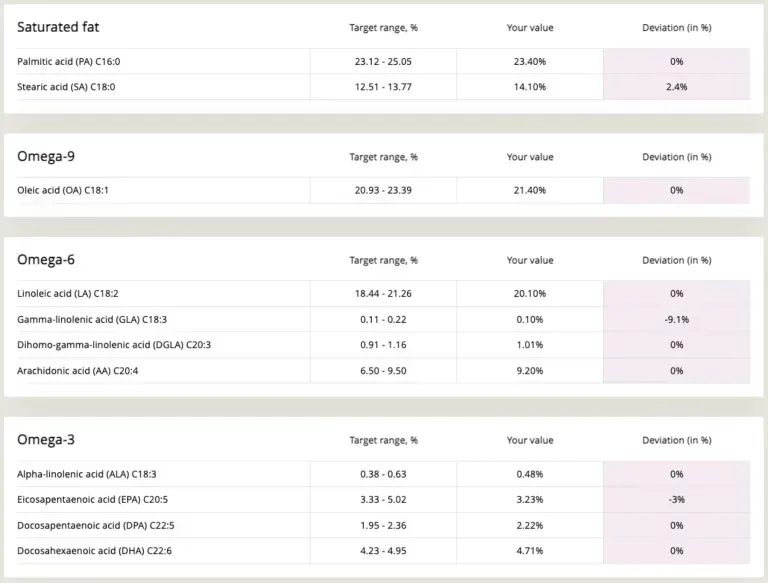
The results really speak for themselves. I still don’t know the absolute values, of course, but the test clearly shows that the levels have increased significantly. In particular, the relative levels of EPA and DHA have risen.
And doesn’t it look good when all the indicators are now green? You immediately get the feeling that everything is in order and that there’s nothing left to worry about 😊
Summa summarum
When I started this four-month omega-3 project, I wanted an answer to a simple question: “Can a premium omega-3 supplement be better than a regular grocery store omega?”
During the project, it quickly became clear that the question is not simple — not because there is no answer, but because the omega-3 market is full of marketing, assumptions, and partial truths that are not always questioned. Through testing, reading, and reviewing research, I learned the following:
First: Nothing is more essential than how much EPA and DHA the body actually receives. Polyphenols, olive oil, index formulas, and marketing concepts labeled as “synergy” are ultimately just marketing. There is no magic involved. Biology works on quantities here. By simply checking the expiration date, you can buy a high-quality omega-3 oil from your local grocery store and achieve the exact same benefits — at a much lower price.
Second: Along the way, it became clear that ratio-based thinking (3:1, 5:1, etc.) is rooted in outdated evolutionary models rather than current scientific evidence. High-quality meta-analyses show that omega-6 (linoleic acid) does not increase cardiovascular risk and is actually associated with lower mortality — the exact opposite of what many “balance products” claim.
Third: BalanceOil is undoubtedly a high-quality oil blend — there’s no question about that. It works exactly as a high-quality omega-3 supplement should. However, during the project it became clear that EPA and DHA amounts are the true engine of the product, that the polyphenol argument is not scientifically special, and that the real oxidative protection almost certainly comes solely from vitamin E, just as it does in other omega-3 oils.
Fourth: The Zinzino test is not a scam — it is genuinely a high-quality fatty acid test. Its interpretation, however, is not as straightforward as it is made to seem. To interpret the results correctly, one needs to understand what is actually being measured and what is not. All in all, it is a good test, and I’m glad I did it. My own EPA and DHA levels in the blood were low initially, and repeating the test showed that the improvement was quite substantial. Whether the tests were worth the price is up to you to decide. I certainly wouldn’t have done them without this project.
The best outcome of this project for me, however, is that omega-3 supplementation has now become a daily habit for me. Using fish oil is clearly justified, and it would be beneficial for everyone to use it — as long as you make sure that your EPA and DHA intake is sufficient, a regular grocery store oil works perfectly well.
As for Zinzino’s BalanceOil itself, I would say its use makes sense if you value the convenience of an automatic subscription and the high price does not bother you. Unfortunately, I don’t see much other justification for it. It is a high-quality oil, but the premium price does not add anything to the product itself. With the subscription model, the monthly cost for BalanceOil+ appears to be somewhere around €45. There is also a premium version of BalanceOil with higher polyphenol content and a higher price, and that certainly won’t do anything particularly special for omega-3 levels either.
Finally, I want to emphasize that this is not a hate piece against Zinzino. They have a quality product, but based on my experience, its use is not justified given the high price. You can draw your own conclusions based on this article. I also want to give ten points and a gold star to the Zinzino representative I spoke with — he handled his work professionally and appropriately.
Thank you for your interest! What product should we test next??


© 2026 All rights reserved